Sleep is one of the most crucial components of health and wellness, but many individuals suffer from sleep-related breathing disorders that have a negative impact on their lifestyle. Sleep apnea may result in snoring, frequent awakening at night, tiredness in the daytime, and breathing pauses while sleeping. A CPAP machine is the initial treatment that is recommended for many patients. In some individuals, however, CPAP therapy may not be comfortable or effective and physician may recommend an alternative therapy of BiPAP.
Patients need to be aware when to switch from CPAP to BiPAP to make well-informed decisions regarding their sleep and respiratory care. CPAP or BiPAP is determined by the level of severity, breathing pattern, medical requirements and response to treatment.
CPAP Therapy is what?
One of the most prevalent methods of treating OSA is CPAP (Continuous Positive Airway Pressure) therapy. CPAP machines are devices that provide a constant flow of pressurized air through a mask to keep airways open while sleeping. This helps to minimize pauses in breathing and reduce oxygen levels throughout the night.
CPAP therapy can be very effective for treating mild to moderate OSA. It typically works well to cut down on snoring, sleep quality and airway blockage.
But for some individuals, CPAP can be uncomfortable or symptoms may persist despite its use. Under these circumstances, physicians might consider trying an alternate treatment.
What is BiPAP Therapy?
BiPAP therapy (Bilevel Positive Airway Pressure therapy) is a more advanced breathing support therapy that utilizes two pressure levels. It gives a higher pressure when the patient inhales, and a lower pressure when the patient exhales.
If you don’t sleep well with a CPAP machine, you may find that a BiPAP machine makes breathing easier for you. It is frequently used for patients with some sleep apnea, breathing conditions or when extra respiratory help for the patient is needed.
Due to their individual requirements for sleep apnea pressure settings and comfort during sleep, patients may find a BiPAP machine more beneficial.
CPAP vs BiPAP: Understanding the Difference
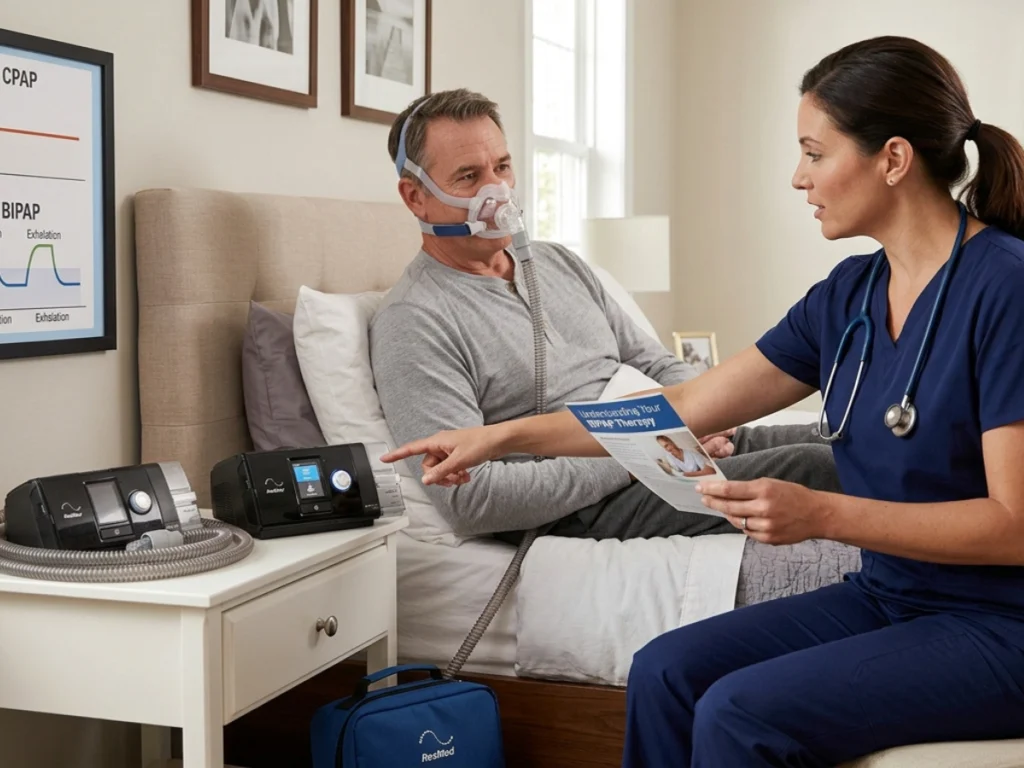
The difference between CPAP vs BiPAP is the way the air pressure is provided.
CPAP offers one pressure level all night long, whereas BiPAP offers two pressure levels — one on inhale, one on exhale.
CPAP:
- Supplies a static pressure.
- Medications are commonly used to treat OSA.
- Promotes ventilation.
- It is a suitable treatment for many mild to moderate cases.
BiPAP:
- Has two pressure settings.
- Helps with breathing in/out more easily.
- Useful for the patients with higher pressure requirement.
- May help some people who have trouble tolerating CPAP more comfortable.
CPAP vs BiPAP will be depending on the patient’s condition and a healthcare provider’s recommendation.
Also Read: CPAP vs Auto CPAP: Which One Is Right for You?
When Should You Switch from CPAP to BiPAP?
Always consult the physician about symptoms and treatment progress before making the choice to switch from CPAP to BiPAP. A switch may be considered in some of the following scenarios:
1. CPAP Therapy Is Not Providing Enough Relief
A physician might recommend BiPAP therapy if a patient has trouble sleeping, feels tired during the day, experiences breathing issues or awakens frequently, even with regular CPAP use.
If symptoms persist, it may mean that the current pressure settings are not adequate for the patient’s needs when they breathe.
2. Difficulty Exhaling Against CPAP Pressure
Some patients do not like the constant pressure they receive from CPAP devices when they are exhaling. This can make it hard to keep going with therapy.
During exhalation, the pressure is lowered when using a BiPAP machine and it can make breathing more natural and comfortable.
3. Need for Higher Pressure Support
Some patients need more air pressure to keep their airway open. With higher CPAP pressure settings, comfort may be a problem.
BiPAP offers both inhalation and exhalation pressures, along with better pressure management.
4. Certain Breathing Conditions
BiPAP can be useful for patients with certain respiratory issues who require extra support in breathing. BiPAP might be recommended for individuals who need more assistance than CPAP can offer.
5. CPAP Intolerance
Certain patients discontinue use of CPAP due to discomfort, mask problems, air pressure problem, or difficulties with starting CPAP. A health care provider may recommend BiPAP as a treatment if these problems persist despite making adjustments to the mask or settings.
Signs You Need BiPAP
Being aware of the symptoms you might have and need BiPAP can help you have a conversation with your doctor about your treatment options. Some common signs include:
- Tiredness with CPAP use even after using it.
- Some difficulty breathing (CPAP pressure).
- If the patient has trouble exhaling while using the CPAP mask.
- Despite regular CPAP use, poor sleep quality is observed.
- A need for increased pressure is noted.
- If sleep apnea symptoms continue for long periods of time.
- Discomfort that affects CPAP usage.
Whether or not BiPAP is needed depends on these signs, but it could mean that your current therapy should be assessed.
Benefits of Switching to BiPAP Therapy
BiPAP therapy can provide a number of advantages for appropriate patients:
Improved Comfort
Some people feel it is easier and more comfortable to breathe with BiPAP during sleep since it is used to decrease pressure during exhalation.
Better Breathing Support
BiPAP may offer extra help for patients who require assistance to establish good breathing patterns.
Personalized Treatment
There is a BiPAP machine that provides pressure control of the two pressures independently, and this may be tailored to the individual’s needs.
Better Therapy Compliance
If patients feel more comfortable, then they are more likely to use their machine regularly which makes the treatment more effective.
Is BiPAP Better Than CPAP?
It will depend on the patient. CPAP has proven to be very effective for many patients who have obstructive sleep apnea, and BiPAP might be more appropriate for those who require varying levels of pressure or extra ventilation support.
The purpose is not to pick the advanced machine – it’s to pick the correct therapy to suit medical requirements.
Sleep study, medical evaluation, and consultation with a health care provider can help identify the type of machine (CPAP vs. BiPAP) that is best.
Choosing the Right BiPAP Machine for Sleep Apnea
When your doctor prescribes BiPAP, it is important to select the proper device. Pressure setting, comfort, mask compatibility, portability and ease of use should be taken into consideration.
When used properly, a quality BiPAP machine for sleep apnea can enhance the quality of sleep and facilitate more regular breathing.
Conclusion
Patients who do not benefit adequately from their CPAP should know when it’s time to switch to BiPAP. CPAP therapy is effective for some individuals, but for others, it’s necessary to use advanced pressure support that can be provided through BiPAP therapy.
Patients who know the difference between CPAP vs BiPAP, and are aware of the symptoms that require the use of BiPAP can be better equipped to engage with health care professionals. When CPAP is uncomfortable, ineffective or too hard to tolerate, a medical evaluation can check to see if it’s appropriate to switch to BiPAP for better sleep and breathing support. Contact Us Today!