Millions of people around the world suffer from sleep apnea and one of the best ways to control the condition is to wear a CPAP machine. Continuous Positive Airway Pressure (CPAP) therapy also prevents your airway from collapsing during sleep and alleviates pauses in breathing, promoting better sleep. There are however, many people who have CPAP Machine Problems during the first few days of using a therapy or after extended use. Fortunately, many of these problems are easily solved.
If you are still new to CPAP therapy or have used the device for years, it’s important to know about the potential CPAP issues and how to resolve them to keep your sleep comfortable and uninterrupted. In this guide, we will be identifying the most frequent CPAP Machine Problems and how to solve them, as well as what causes these problems. In this guide, we will focus on the most common CPAP Machine Problems, what causes them, and how to solve them.
Understanding CPAP Therapy
A CPAP machine is a machine that pushes air through a mask during sleep to keep your airway from collapsing. It is often used to treat people with obstructive sleep apnea (OSA).
The system consists of typically:
- CPAP machine
- Air tubing
- Humidifier (optional or inbuilt)
- CPAP mask
- Filters
All components need to be maintained and used properly to ensure successful treatment.
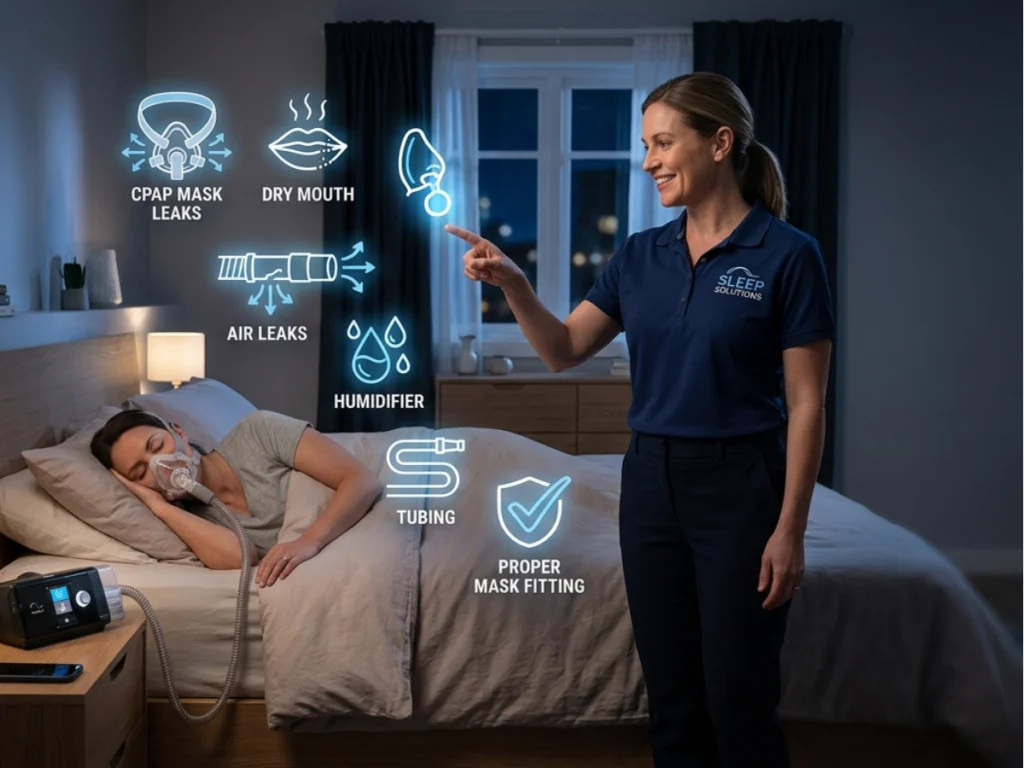
1. CPAP Mask Leaks
One of the most common CPAP Machine Problems is CPAP mask leaks. If air leaks through the side of the mask, treatment is not as effective and it may disrupt sleep.
Causes
- Loose headgear.
- Incorrect mask size.
- Worn-out mask cushion.
- Sleeping position changes.
- Any facial hair that covers the seal.
Solutions
- Troubleshoot the mask straps making sure not to put too much strain on them.
- Change worn cushions at least twice a month.
- Choose the correct mask size.
- If necessary, use a different type of mask.
- Wash mask cushion every day to get rid of oils on the face.
Correct CPAP mask fitting is essential for optimal use of the machine and to avoid any leaks.
2. CPAP Dry Mouth
Many CPAP users complain about experiencing CPAP dry mouth, especially those who tend to breathe through their mouth during sleep.
Causes
- Mouth breathing.
- Low humidifier settings.
- Air leaks from the mouth.
- Dry bedroom environment.
Solutions
- Increase the humidifier level.
- If available, use a heated tube.
- If recommended, wear a chin strap.
- If you breathe through your mouth, wear a full face mask.
- Remain well hydrated all day long.
Managing CPAP dry mouth makes it more comfortable. Helps you stick to your therapy.
3. Difficulty Adjusting to CPAP Therapy
Some new users are apprehensive about sleeping with CPAP machine.
Common Symptoms
- Feeling claustrophobic.
- Difficulty falling asleep.
- Wearing the mask causes anxiety.
Solutions
- Wear the mask while reading or watching TV.
- Use the machine during brief naps during the day.
- Begin with the feature of the ramp.
- Slow and deep breathing.
Consistency is important. Most users take to it within the first few weeks.
4. CPAP Air Leaks
CPAP air leaks can also be caused by tubing or machine connections other than mask leaks.
Causes
- Cracked tubing.
- Loose hose connections.
- Damaged seals.
- Old equipment.
Solutions
- Inspect tubing regularly.
- Replace damaged hoses.
- Make sure all connections are tight.
- Change out worn parts as per manufacturer’s schedule.
CPAP Air leakage will cause unchecked pressure to drop and will impact how effective the CPAP therapy.
Also Read: Oxygen Concentrator Maintenance Tips for Long-Term Use
5. Skin Irritation and Pressure Marks
Some users experience redness/irritation at the point of contact with skin.
Causes
- Tight mask straps.
- Dirty mask cushions.
- Sensitive skin.
- Incorrect mask type.
Solutions
- Wash your face before going to sleep at night.
- Clean the mask daily.
- Adjust strap tension.
- Use mask liners.
- If irritation occurs, try using a different type of mask.
Correctly CPAP mask fitting will greatly decrease pressure points.
6. Feeling Bloated or Swallowing Air (Aerophagia)
Some people swallow air when sleeping.
Symptoms
- Bloating
- Burping
- Stomach discomfort
- Gas
Solutions
- Talk to your sleep specialist about adjustments of pressure.
- Sleep on your side.
- Take advantage of the ramp feature.
- If recommended, consider the use of Auto CPAP.
Do not adjust the pressure settings without medical advice.
7. CPAP Machine Noise
If the CPAP machine is noisy, it may disturb you and your partner.
Causes
- Dirty filters
- Loose tubing
- Aging motor
- Mask leaks
Solutions
- Regularly clean or replace filters.
- Tighten hose connections.
- Replace damaged tubing.
- Place the machine on a stable surface.
Currently, CPAP machines are typically quiet. If there are sounds that are unusual, then you need maintenance.
8. Condensation in the Tube (Rainout)
The inner tubing can become filled with water droplets.
Causes
- Cool room temperatures.
- High humidity settings.
- Cooling inside the tube by heated air.
Solutions
- Use a heated tube.
- Reduce the setting on the humidifier.
- Never place the machine above the bed.
- Use a hose cover.
These measures help to prevent condensation and to keep the air comfortable.
9. Nasal Congestion or Runny Nose
A few users may experience nose irritation when they first use CPAP.
Causes
- Dry air
- Allergies
- Dusty filters
- Cold weather
Solutions
- Use heated humidification.
- Clean or replace filters.
- Flush nose with saline before going to sleep.
- Keep your bedroom clean.
Most symptoms affecting the nose get better after a few days of adjustment.
10. High Pressure Feels Uncomfortable
Some users are overwhelmed by the air pressure.
Solutions
- Enable: Ramp feature.
- Check mask fit.
- Talk to your sleep doctor.
- Consider pressure reassessment.
Never adjust the pressure without professional advice.
Importance of Proper CPAP Mask Fitting
Poor CPAP mask fitting is one of the major causes of CPAP Machine Problems.
A mask is well fitted if it:
- Seal comfortably.
- Prevent air leaks.
- Avoid pressure sores.
- Keep cool and secure at night.
- Allow natural movement.
Several different types of masks are available:
- Nasal masks
- Nasal pillow masks
- Full-face masks
The kind you select will depend on your sleeping patterns and your breathing pattern.
Essential CPAP Machine Care Tips
Properly taking the CPAP machine care will extend its lifespan and enhance the effectiveness of the therapy.
Daily Care
- Clean the mask cushion.
- Empty the humidifier chamber.
- Wipe down the mask.
Weekly Care
- Wash tubing.
- Clean humidifier chamber.
- Wash headgear.
- Inspect filters.
Monthly Care
- Check tubing for wear.
- Change away the disposable filters as required.
- Inspect mask cushions.
Normal maintenance of your CPAP machine care decreases infections, better performance and unexpected failure of the machine.
When to Replace CPAP Components
Regular replacement will maintain optimum performance.
| Component | Recommended Replacement |
| Mask Cushion | Every 1–3 months |
| Mask Frame | Every 3–6 months |
| Headgear | Every 6 months |
| Tubing | Every 6–12 months |
| Filters | Every 1–3 months |
| Humidifier Chamber | Every 6–12 months |
Replacing worn parts helps prevent CPAP air leaks and improves comfort.
More comfortable with fewer CPAP air leaks, as parts are replaced before they become worn out.
Tips for Successful CPAP Therapy
To maximize the results:
- Use the CPAP machine at night.
- Wear it for the entire sleep duration.
- Clean equipment regularly.
- Change worn parts in a timely manner.
- Follow your doctor’s recommendations.
- Keep up regular post-treatment checkups.
- If any problem persists, see your health care provider.
Tiny changes can have a huge impact on CPAP therapy success!
When Should You Contact Your Doctor?
Although many CPAP Machine Problems can be solved at home, please seek professional advice if you deal with any of the following:
- Persistent mask leaks.
- If humidification does not alleviate dry mouth, it is a sign of severe dry mouth.
- Ongoing difficulty breathing.
- Frequent machine errors.
- Persistent daytime sleepiness.
- Chest discomfort.
- Unusual machine noises.
Your sleep specialist can assess your therapy settings and make appropriate changes.
Frequently Asked Questions (FAQs)
1. Why is the air leakage in my CPAP machine?
Air leaks typically occur when the CPAP mask fitting properly, straps are loose or the tubing is damaged or worn out, or cushions are worn.
2 What can be done to avoid having dry mouth while using CPAP?
A heated humidifier, remaining hydrated, wearing a chin strap or switching to a full face mask can help alleviate dry mouth from the CPAP machine.
3. How often do I need to clean my CPAP machine?
Proper CPAP machine care requires the mask to be cleaned daily, the humidifier chamber to be cleaned weekly and the headgear to be cleaned weekly.
4. What causes CPAP air leaks?
Air leaks around the mask may happen because of the improper seal of the mask, damaged tubing, loosen connections or worn mask cushion.
5. How do I know if my CPAP mask fits correctly?
The mask should fit well and not leave marks on the face, create any undue pressure or have any major air leak.
Conclusion
It is easy to have CPAP Machine Problems, particularly when you first start using a CPAP machine, but most problems can be solved by making simple adjustments, regular maintenance, and using the correct equipment. No matter what problems you encounter with CPAP use, like CPAP mask leaks, CPAP dry mouth, improper CPAP mask fitting, CPAP air leaks, or inadequate maintenance of the machine, it should never be a reason to quit treatment.
With regular cleaning and timely replacement of the worn parts, as well as your health care professional’s guidance when necessary, you can experience easier, more effective CPAP therapy. With some time and attention, your CPAP machine can help you get a better night’s rest, feel better, and be healthier in the future. Contact Us Today!