While sleep is a vital part of good health, it can be difficult to get a good night’s rest for individuals with sleep apnea. Sleep apnea is a very common sleep disorder that is characterized by repeated breathing interruptions during sleep. These disruptions can cause poor sleep quality, daytime fatigue, headaches and other health issues. Although there are other treatment options like the CPAP machine, many people do not realize the significance of a sleeping position. The Best Sleeping Positions can make breathing easier, minimize symptoms, and help sleep quality improve.
In this guide we will look into the Best Sleeping Positions for Sleep Apnea, and discuss how body posture relates to breathing, and then offer practical tips on how to sleep with sleep apnea comfortably and safely.
Understanding Sleep Apnea
Sleep apnea is a sleep disorder that causes breathing to stop and resume many times during sleep. The most frequently observed type is Obstructive Sleep Apnea (OSA) which is the result of the muscles in the throat relaxing too much and blocking the airway.
Common symptoms of sleep apnea are:
- Loud snoring.
- Snoring, especially if loud.
- Regular night time wakes.
- Morning headaches.
- Difficulty eating and drinking dry food or milk.
- Excessive daytime sleepiness.
- Difficulty concentrating.
- Irritability and mood swings.
Sleep apnea can lead to high blood pressure, heart disease, diabetes and stroke if left untreated. It is important, therefore, to treat the condition properly and to keep up good sleeping habits.
Why Sleeping Position Matters for Sleep Apnea
Sleep apnea symptoms can be worsened by your sleeping posture. Some jobs can lead to the tongue and soft tissues in the throat collapsing back, decreasing the airway and making breathing more difficult. Other positions aid in maintaining the airway open, facilitating smoother breathing and a reduced number of breathing breaks.
The Best Sleeping Positions for Sleep Apnea can help to minimize snoring, increase oxygen levels and promote better sleep. Sleep position is not a sole treatment for sleep apnea, but can be an important component of treatment.
1. Side Sleeping: The Best Position for Sleep Apnea
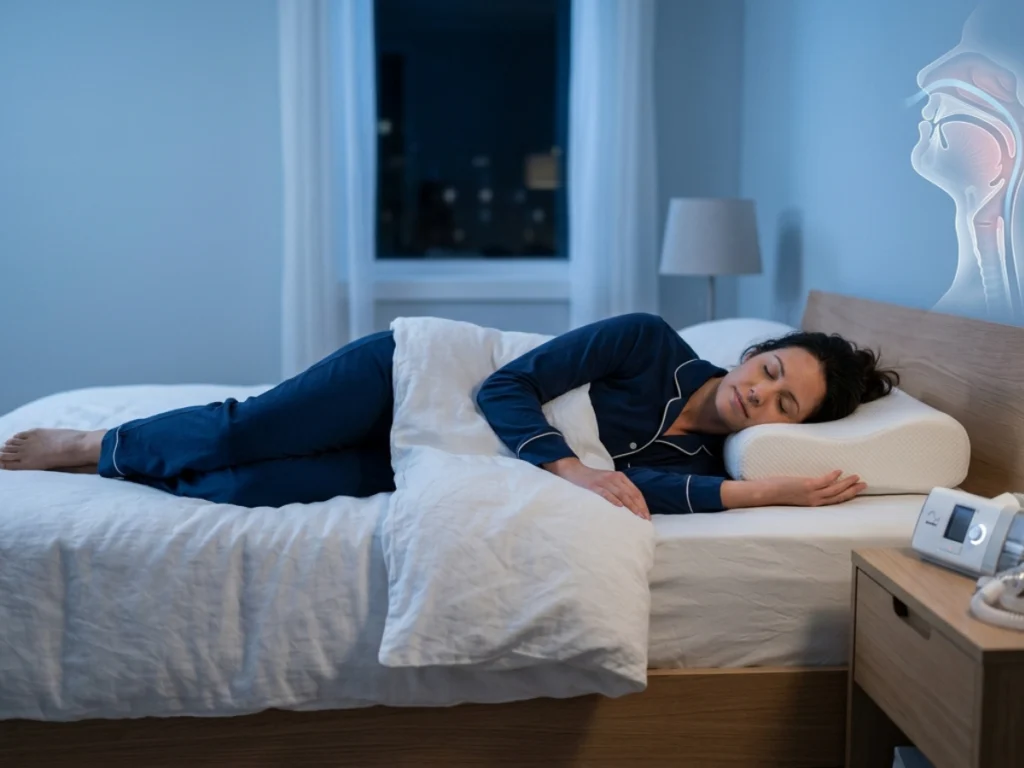
Sliding the side is one of the Best Sleeping Positions for most individuals who have obstructive sleep apnea. Side sleeping reduces the chances of tongue and soft tissues obstructing the airway.
Benefits of Side Sleeping
- Reduces the risk of choking
- Reduces snoring
- Decreases breathing interruptions
- Promotes better air circulation and oxygenation
- Enhances sleep quality
For many sleep experts, sleep apnea sleeping position is the best one – because they have a natural advantage in breathing all night long while sleeping on their side.
Left Side vs. Right Side
It can be good for both sides to see sleep on both, but there are some people who prefer to sleep on the left side as it may help circulation and digestion. But, either sleeping position is better than sleeping on the back for sleep apnea management.
2. Elevated Side Sleeping
The combination of side sleeping and the slight elevation of the head and upper body both to the right and left is an elevated side-sleeping position. This position can be helpful for those who have acid reflux as well as sleep apnea and helps relieve airway blockage.
Benefits
- Improves airway stability
- Calms the nerves
- Helps minimise snoring
- Supports comfortable breathing
Adjustable beds or wedge pillows can help to achieve the optimal raised posture in bed.
3. Sleeping with the Head Elevated
One of the other Best Sleeping Positions for Sleep Apnea is sleeping with a 30 to 45 degree head elevation.
Elevation will discourage gravity from drawing the tongue and soft tissues back into the airway. This can result in less disruption of sleep and a better quality of sleep.
Ways to Elevate Your Head
- Use an adjustable bed
- Place a wedge pillow under the upper body
- Raise the head of the bed safely
A large number of people find that by sleeping on their sides, they will get less snoring and breathing problems.
Also Read: Best Portable Oxygen Concentrator for Travel in India
Sleeping Positions to Avoid
There are certain jobs that can help sleep apnea while others can make it worse.
Back Sleeping
For people who have obstructive sleep apnea, being on their back is frequently the worst sleep apnea sleeping position. If lying on back:
When lying on the back:
- The tongue may fall backwards.
- Sometimes the airway is blocked by soft tissues.
- Snoring often becomes louder.
- Breathing interruptions might be increased.
Research has revealed that sleep apnea is more likely to happen and happen more often when sleeping on one’s back.
Stomach Sleeping
While stomach sleeping can decrease airway collapse in some instances, in general, it is not advised, as it may cause:
- Cause neck strain.
- Lead to back pain.
- Reduce the supply of sleep.
Side sleepers are generally the best and most comfortable sleepers.
How to Train Yourself to Sleep on Your Side
It is normal for many to sleep in a supine position. Fortunately, there are a few ways to help keep you in the side sleeper position.
Use Body Pillows
Using a long body pillow can offer support and help side sleeping to be more comfortable. It will prevent rolling backwards on the bed during the night.
Positional Therapy Devices
Special sleep apnea positional therapy devices are created to promote side sleeping and stop back sleeping.
Tennis Ball Technique
Some people put a tennis ball into a pocket that is sewn onto the back of a pyjama shirt. This causes back sleeping to be uncomfortable, and promotes side sleeping.
Use Proper Pillows
Side sleeping is easier to maintain with supportive pillows that maintain proper alignment.
Choosing the Best Pillow for Sleep Apnea
The Best pillow for sleep apnea can improve the quality and comfort of sleep.
Features to Look For
Proper Neck Support
A pillow should maintain the neck in alignment with the spine and not allow too much bending.
Side-Sleeper Design
Contoured pillows for side sleepers can offer improved assistance to help keep the correct sleeping position.
CPAP Compatibility
If you use CPAP therapy, an expertly designed CPAP pillow can fit the mask and tubing to minimize air leakage and discomfort.
Breathable Materials
Fabrics that are breathable and memory foam can help with comfort without sacrificing support.
The Best pillow for sleep apnea is one that will support the proper alignment, encourage side sleeping and work with your treatment needs.
How to Sleep with Sleep Apnea More Comfortably
When it comes to sleep apnea sleeping positions, there are techniques that may help you achieve better sleep if you have any questions about sleeping with sleep apnea.
Maintain a Consistent Sleep Schedule
Follow a Sleep Routine – Go to bed at the same time every night and get up at the same time every morning.
Use CPAP Therapy Consistently
CPAP therapy is still considered one of the best treatments for OSA. Regular use of your machine can help to alleviate symptoms and enhance sleep.
Keep Your Bedroom Comfortable
An environment for sleep that is cool, dark and quiet helps to induce a more restorative sleep state.
Avoid Alcohol Before Bed
Drinking alcohol may loosen throat muscles and either make the airways narrow or cause them to become overactive.
Stay Physically Active
Exercise is beneficial to maintaining a healthy weight and could decrease the severity of sleep apnea symptoms.
Sleep Apnea Home Remedies
Medical treatment is usually required, but there are a few remedies for sleep apnea that people can try at home to help alleviate some symptoms and get better sleep.
Weight Management
Having too much excess body weight can lead to airway blockage. Some people may find that they have a less severe case of sleep apnea after they lose weight.
Regular Exercise
Exercise builds up the body, increases cardiovascular fitness and enhances the quality of sleep.
Nasal Breathing Support
Nasal saline irrigation or humidification can help keep the nasal passages open, which can help breathing during sleep.
Avoid Smoking
Smoking can cause inflammation and swelling of the airways, which can make it harder to breathe.
Improve Sleep Position
One of the easiest and more effective sleep apnea home remedies is to change to one of the Best Sleeping Positions for Sleep Apnea, particularly sleeping on your side.
Remember, home remedies should be used in conjunction with professional medical treatment, if necessary.
Combining Sleep Position with CPAP Therapy
Many people find it more effective to use correct position and sleep with CPAP.
Benefits include:
- Better airway support
- Reduced mask leaks
- Improved comfort
- Higher treatment compliance
- Improved general sleep patterns
CPAP users may find side sleeping particularly beneficial as it can help to lower the need for pressure and enhance the effectiveness of the therapy.
When to Seek Professional Help
If you have ongoing sleep apnea symptoms, it is important to seek expert evaluation. Warning signs include:
- Loud chronic snoring
- Frequent nighttime awakenings
- Witnessed breathing pauses
- Excessive daytime fatigue
- Difficulty concentrating
- Morning headaches
Diagnostic testing by a sleep specialist can then be performed and the most appropriate treatment plan recommended.
Final Thoughts
The Best Sleeping Positions can help you achieve better sleep and a healthier sleep experience when it comes to sleep apnea. Of all the positions, side sleeping is considered the best sleep apnea sleeping position because it keeps the airway open and decreases the interruptions in breathing. Raising the head and upper body may be helpful, particularly for people who snore or suffer from acid reflux.
The key how to sleep with sleep apnea is to sleep on your side, choose the Best pillow for sleep apnea, practice healthy sleep habits, and stick to prescribed treatments. These strategies don’t eliminate sleep apnea, but they can certainly minimize its symptoms and make your sleep more restful and refreshing.
With the use of the Best Sleeping Positions for Sleep Apnea and proper medical treatment in addition to effective sleep apnea home remedies, you can make a difference in achieving a better sleep, better health and a better quality of life. Contact Us Today!
FAQs – Best Sleeping Positions for People with Sleep Apnea
1. What is the best sleeping position for people with sleep apnea?
The best sleeping position for people with sleep apnea is sleeping on the side. Side sleeping allows the airway to stay clear, decreases snoring and decreases interruptions with breathing. A sleep position with the head raised slightly will also promote better air circulation and sleep quality.
2. Is there a specific position that might help decrease sleep apnea symptoms when sleeping?
Yes. Adjusting your sleep apnea sleeping position can help reduce snoring, enhance breathing and lower mild to moderate signs of sleep apnea. If symptoms are severe, however, it is best to speak with a sleep specialist for diagnosis and treatment, which might involve CPAP therapy.
3. If you suffer from sleep apnea, which positions should you avoid when sleeping?
Those who suffer from sleep apnea should not sleep on their backs, as it can cause the tongue and throat muscles to obstruct breathing. This “belly” sleep position can also cause neck and back pain. Generally, side sleeping is recommended.
4. So what is the best pillow for sleep apnea?
A good sleep apnea pillow should offer the neck the right support and maintain the spine in its natural alignment. Side sleeper pillows, wedge pillows and CPAP pillows are great options as they keep the airway open and provide comfort while sleeping.
6. Am I eligible for sleep apnea treatment?
Anyone who snores loudly, who has difficulty breathing through sleep, who feels sleepy during the day, suffers from headaches in the morning or has poor sleep quality should seek advice from a sleep specialist. These treatments can help prevent serious health issues and help improve quality of life when diagnosed early and treated with a sleep study, CPAP machine or BiPAP therapy.