Sleep is really important for our health but a lot of people have sleep problems and do not know what is causing them. Some common issues are snoring, feeling tired during the day having trouble breathing while sleeping and not sleeping well. These problems might be a sign of a sleep disorder like sleep apnea. To figure out what is going on doctors often suggest a Sleep Study Test.
When it comes to sleep testing there are two options: a Home Sleep Study and a Lab Sleep Study. Both tests help Sleep Apnea diagnose but they are different in terms of where the test’s done what equipment is used how accurate the results are and how convenient it is. Understanding the difference between a Home Sleep Study and a Lab Sleep Study can help you choose the test based on your symptoms and what your doctor thinks you need.
What Is a Home Sleep Study?
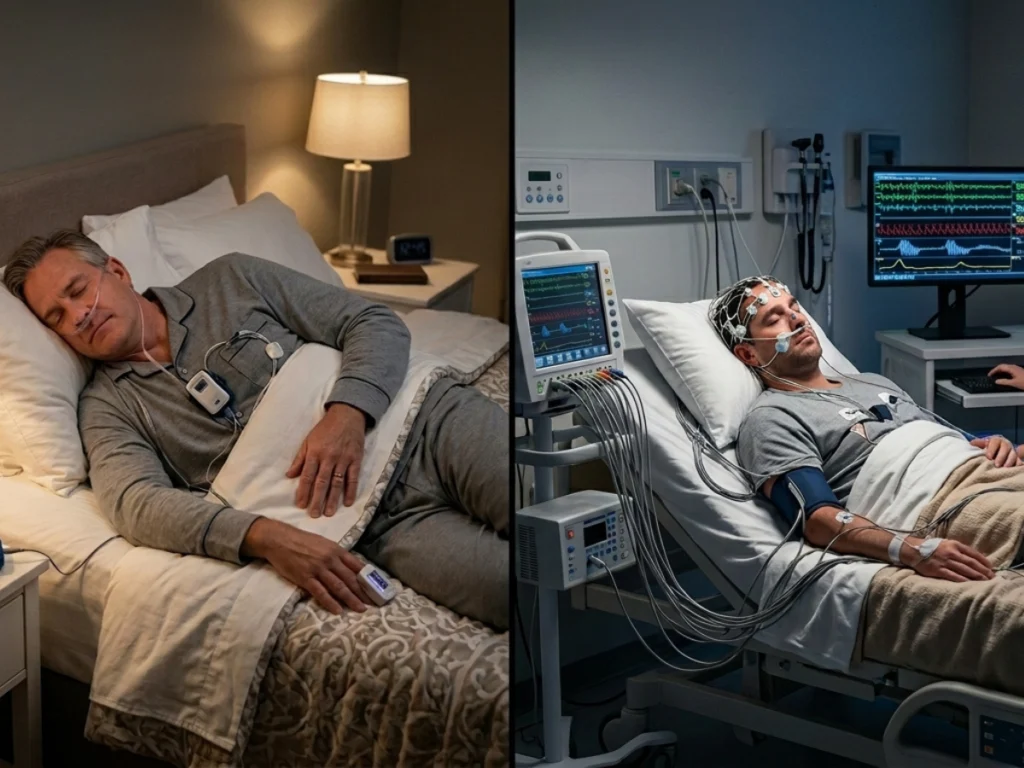
A Home Sleep Study is a test that you can take at home to see how you breathe and sleep. It is also called a Sleep Apnea Test at Home because it is mainly used to check for breathing problems related to sleep apnea.
During a Home Sleep Study a small device records information about your sleep such as:
- How you breathe
- Your oxygen levels
- Your heart rate
- How air you breathe in and out
- How your chest and stomach move
The device is usually given to you by a sleep specialist or your doctor. You wear the sensors while you sleep at home and then a doctor looks at the information that was recorded.
A Home Sleep Study is often recommended for people who have symptoms of sleep apnea such as:
- Snoring loudly and often.
- Gasping or choking while sleeping.
- Feeling very tired during the day.
- Having headaches in the morning.
- Having trouble focusing during the day.
What Is a Lab Sleep Study?
A Lab Sleep Study, also called an Overnight Sleep Study or Polysomnography Test is a test that is done in a special sleep clinic or hospital. During this test a technician watches you sleep all night.
A Lab Sleep Study records information than a home test, including:
- What your brain is doing.
- How your eyes move.
- How your muscles are working.
- Your heart rhythm.
- How you breathe.
- How oxygen you have in your blood.
- How your body moves.
- What stage of sleep you are in.
Because it collects information a Lab Sleep Study gives a complete picture of how you sleep and helps diagnose different sleep problems not just sleep apnea.
Home Sleep Study vs Lab Sleep Study: Key Differences
1. Testing Location
The biggest difference between a Home Sleep Study and a Lab Sleep Study is where you take the test.
A Home Sleep Study lets you sleep in your bed, which is more comfortable and natural. A lot of people find it easier to relax and sleep normally at home.
A Lab Sleep Study means you have to stay at a sleep center, where professionals use special equipment to watch you sleep.
2. Accuracy and Details
Both tests can help diagnose Sleep Apnea. The information they collect is different.
A Home Sleep Study mainly looks at breathing problems. It is good for diagnosing moderate to severe obstructive sleep apnea.
A Lab Sleep Study gives detailed results because it measures brain waves sleep stages and body activity. It is a complete test for complicated sleep problems.
3. Comfort and Convenience
One of the things about a Home Sleep Study is that it is convenient. You do not have to go to a clinic or spend the night in a place.
A Lab Sleep Study might be less comfortable for some people because they have to sleep in a place with a lot of sensors attached to them.
4. Cost Difference
Generally a Home Sleep Study is cheaper than a Lab Sleep Study. This is because you do not need a technician to watch you sleep all night. The cost is usually lower.
However the final cost depends on your doctor, where you live and what kind of equipment is used.
Also Read : Oxygen Concentrator vs Oxygen Cylinder: Complete Comparison
Benefits of Home Sleep Study
A Home Sleep Study has advantages:
Comfortable Testing Environment
Sleeping at home helps your body follow its normal routine. This can give you a natural sleep experience.
Easy and Convenient
You can do the test at home. You do not have to stay at a hospital or sleep center.
Affordable Option
A home test can be a cost- way to start the sleep evaluation process. Many patients find it affordable.
Suitable for Sleep Apnea Screening
A Home Sleep Study is often used when doctors think you might have sleep apnea. They need to do some testing.
Benefits of Lab Sleep Study
A Lab Sleep Study has important benefits:
Detailed Sleep Analysis
The Polysomnography Test gives detailed information about your sleep stages and overall sleep quality.
Professional Monitoring
Sleep technicians watch the test all night. They make sure the equipment is working correctly.
Diagnoses Multiple Sleep Disorders
A Lab Sleep Study can help find conditions like:
- Sleep apnea.
- Insomnia-related issues.
- Movements during sleep.
- Certain neurological sleep disorders.
Better for Complex Cases
People with medical conditions or unclear symptoms might benefit from a detailed lab evaluation.
Is Home Sleep Study Accurate?
Many people ask if a Sleep Apnea Test at Home is accurate. A Home Sleep Study can give results.. It needs to be used for the right patients and interpreted by qualified healthcare professionals.
However it might not capture every detail of your sleep. This is because it usually does not measure brain activity or complete sleep stages.
If your symptoms are unclear or the home test results are negative but sleep problems continue a doctor might recommend a Lab Sleep Study.
Is Lab Sleep Study Better Than Home Sleep Study?
The answer depends on your condition. A Home Sleep Study might be an option if:
- You have common symptoms of sleep apnea.
- Your doctor needs an evaluation.
- You prefer testing at home.
- You want a convenient option.
A Lab Sleep Study might be better if:
- Your symptoms are complicated.
- Previous testing was unclear.
- You have sleep disorders.
- A detailed sleep analysis is required.
Both tests have their own benefits, and the right choice depends on your health condition and doctor’s recommendation.
How to Find a Sleep Study Near Me?
Both tests have their benefits. The right choice depends on your health condition and your doctor’s recommendation.
Before choosing a sleep study provider think about:
- Experience, in sleep disorder testing.
- Quality of equipment.
- Availability of sleep specialists.
- Test interpretation process.
- Follow-up support.
- A proper evaluation can help find sleep problems. It can guide the treatment.
Home Sleep Study or Lab Sleep Study: Which One Should You Choose?
Sleep studies are really helpful for figuring out if you have sleep disorders. You can do a Home Sleep Study which’s convenient and comfortable and does not cost too much money. On the hand a Lab Sleep Study is more detailed and uses advanced machines to monitor you.
If you think you might have sleep apnea doing a Home Sleep Study is a way to start. If you have a complicated sleep problem you might need to do a Lab Sleep Study or a Polysomnography Test to get all the information you need.
The best thing to do depends on how you’re feeling what has happened with your health in the past and what your doctor tells you. Getting the right Sleep Study Test can really help you sleep better breathe better and be healthier overall. Sleep studies like Home Sleep Study and Lab Sleep Study can make a difference, in your life. Contact Now Today!