Sleep apnea is a condition that impacts millions of people all over the world, and can cause disrupted sleep, fatigue during the day, headaches, and potentially severe health problems if it is not treated. One of the best treatments for sleep apnea is Continuous Positive Airway Pressure (CPAP) therapy. But the effectiveness of CPAP therapy mainly relies on the selection of a CPAP Mask.
The key to avoiding discomfort, air leaks, skin irritation, and adaptation problems with therapy is to find the right mask for the user. Choosing the right mask can make wearing it much more comfortable, help ensure good treatment compliance, and enhance overall sleep quality. The following Guide will assist you with knowing the various types of CPAP mask and selecting the ideal one for your needs.
Why Choosing the Right CPAP Mask Matters
A CPAP machine forces air through your airway to maintain airway patency during sleep. The mask is an interface between the machine and your airway. An ill-fitting mask may decrease the effectiveness of therapy, and prevent the machine from being used regularly.
The proper CPAP Mask can offer:
- Better sleep quality.
- Improved therapy effectiveness.
- Reduced air leaks.
- Improved sleep comfort throughout the night.
- Better compliance with treatment.
- It causes less skin irritability and pressure marks.
It is crucial to find a mask that adapts to your sleeping habits and breathing patterns so you can be successful long-term.
Understanding Different Types of CPAP Masks
Choosing the right mask is important so it is necessary to know about the options beforehand.
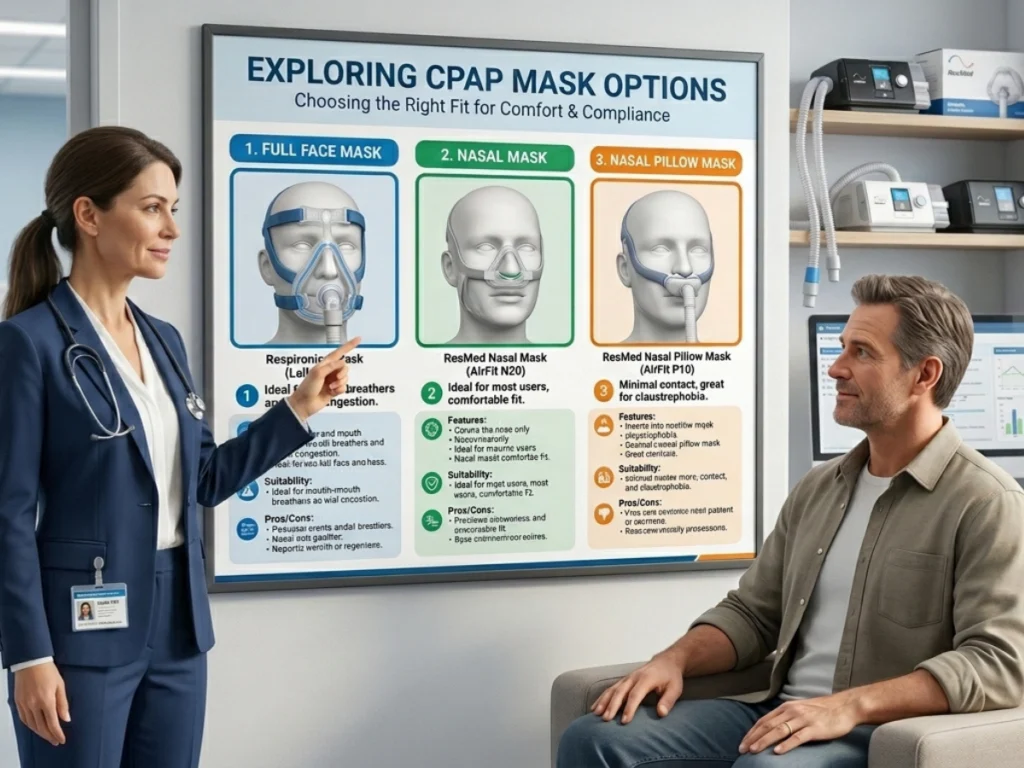
1. CPAP Full Face Mask
CPAP Full Face Mask is a mask that covers both the nose and mouth. It’s best for those who breathe their nose while sleeping or suffer from nasal congestion often.
Advantages
- Appropriate for mouth breathers.
- Effective when you are having trouble breathing coming through your nose.
- Stable therapy pressure is provided.
- Tolerant of higher pressures.
Considerations
- May appear overly large in design.
- Facial contact can be increased.
- May not be comfortable for those who experience claustrophobia.
CPAP Full Face Mask is usually offered to people who have moderate to severe sleep apnea or those that have a problem with keeping their mouth closed in their sleep.
2. Nasal CPAP Mask
A Nasal CPAP Mask can only cover the nose and provides air via the nose.
Advantages
- Lightweight and comfortable.
- Not as thick or as bulky as full-face masks.
- Easily adaptable for active sleepers.
- Provides a clearer field of vision.
Considerations
- Not ideal for mouth breathers.
- Nasal congestion can impact function.
The Nasal CPAP Mask is one of the most comfortable masks due to its lightweight design and the minimal coverage on the face.
3. Nasal Pillow Masks
These masks are made with soft cushions which are placed under the nostrils.
Advantages
- Use the minimum contact to clean your face.
- Lightweight design.
- Side sleepers will enjoy this the best.
- Less claustrophobic.
Considerations
- May not work well in conditions of extremely high pressure.
- A few people need to experiment to find the right solution for them.
For those who want the freedom and lack of facial pressure as much as they can get, nasal pillow masks are one of the options that are commonly recommended as the Best CPAP Mask.
Also Read : Find the Best CPAP, BiPAP & Oxygen Concentrator Machine
Factors to Consider When Choosing a CPAP Mask
Your Breathing Style
The first is the way you breathe normally during sleep.
Mouth Breathers
A CPAP Full Face Mask is typically used for people who use a mask for breathing frequently. It helps to keep the therapy effective even if your mouth opens while you sleep.
Nose Breathers
A Nasal CPAP Mask or nasal pillow mask could be more comfortable if you are a nose breather.
Sleeping Position
Your preferred sleeping position can affect which mask you choose for your sleep.
Side Sleepers
Side sleepers tend to find smaller masks, like nasal pillow masks or small nasal masks are ideal. The bigger the mask, the more likely it will change position and leak while sleeping.
Back Sleepers
For back sleepers, most types of masks are good as there is less pressure against the mask.
Stomach Sleepers
Minimal-contact masks are frequently a better fit for stomach sleepers.
Pressure Settings
The set CPAP pressure may affect the performance of your mask.
Generally, more pressure with the CPAP Full Face Mask is more effective, and less pressure with nasal masks or nasal pillow masks is comfortable.
Facial Structure
Each face shape is different. One person’s perfect fit mask might not fit another. Consider:
- Nose size
- Face width
- Facial hair
- Cheekbone structure
You may have to try a variety of styles before you reach the right one.
The Importance of Proper Mask Fit
The Best CPAP Mask can be uncomfortable if it does not fit properly.
A properly fitted mask should:
- Make a tight connection.
- No excessive tightness, feel comfortable.
- Stay in place during sleep.
- Avoid large amounts of leakage into or out of the house.
Many users over tighten their masks. If it is too tight, it can cause more discomfort and pressure points.
CPAP Mask Fitting Guide
Adhering to a CPAP Mask Fitting Guide can utterly enhance the feeling and efficacy of your therapy.
Step 1: Measure Your Face
Most manufacturers offer sizing templates. Follow manufacturer’s instructions for measurement.
Step 2: Adjust the Headgear
Put on the mask and tighten the straps equally. Mask should feel snug but not tight.
Step 3: Test While Lying Down
Put the mask on while sleeping as you normally do. When resting, facial contours slightly alter.
Step 4: Turn on the CPAP Machine
Turn on CPAP machine and look for air leaks around the mouth, cheeks and nose.
Step 5: Fine-Tune the Fit
Adjust in small increments until the mask fits snugly but not causing any pressure points.
Many common comfort problems can be eliminated with the help of this simple CPAP Mask Fitting Guide.
Common CPAP Mask Problems and Solutions
Air Leaks
Air leakage can diminish the effectiveness of therapy, and disrupt sleep.
Solution
- Reposition the mask
- Replace worn cushions
- Verify correct sizing
- Use a correct CPAP Mask Fitting Guide
Skin Irritation
Sometimes extended mask use can cause some redness and irritation.
Solution
- Perform daily cleaning of the mask(s)
- Use mask liners
- Avoid overtightening
- Change worn parts in a timely fashion.
Dry Nose or Mouth
CPAP airflow can cause dryness.
Solution
- Use a heated humidifier
- Increase humidity settings
- Think about changing the type of mask
Claustrophobia
Some users don’t like bigger masks.
Solution
- Try a smaller Nasal CPAP Mask.
- Wear the mask while awake to become accustomed to it gradually.
How Often Should You Replace Your CPAP Mask?
Regular replacement to maintain comfort and hygiene.
General replacement schedule:
- Remove and replace mask cushion every 1-3 months.
- Headgear: Every 6 months.
- Complete mask: Every 6-12 months.
A properly functioning seal is essential for therapy to be effective, and worn components need to be replaced.
Tips for Maximizing CPAP Mask Comfort
Keep Your Mask Clean
Every day, the oils, dirt and bacteria are being removed that could impact comfort and mask performance.
Use the Right Pillow
Special pillows that are designed to be CPAP-friendly can decrease pressure from the mask and ensure it maintains a good seal.
Replace Worn Parts Promptly
Folded or worn out cushions and straps may lead to leakage and discomfort.
Allow Time to Adjust
It can sometimes take weeks for new patients to get used to therapy.
Experiment if Necessary
The Best CPAP Mask may require multiple tries of various styles to find the most comfortable mask.
Should You Buy CPAP Mask Online?
The convenience and availability of a larger choice of CPAP Mask Online make it a favored option for many users.
Benefits include:
- For multiple brands, there is access.
- Competitive pricing.
- Convenient home delivery.
- All features are easily compared.
- Including customer reviews and ratings.
If you’re considering Buy CPAP Mask Online, be sure to look for a reputable provider that ensures you get a quality mask, the correct size, and customer service.
How to Identify the Best CPAP Mask for You
There is no “one-size-fits-all” Best CPAP Mask as each person feels different about it. The best mask will depend on the following:
- Breathing habits
- Sleeping position
- Pressure requirements
- Facial structure
- Personal comfort preferences
Anyone else—breathing through the mouth—may want a Full Face Mask to wear, and a side sleeper might want a Nasal CPAP Mask to wear.
The aim is to discover a mask which can be comfy to wear for the whole night.
Conclusion
One of the most crucial things to consider for successful sleep apnea therapy is the right CPAP Mask. No matter which mask you choose for your CPAP machine, comfort and fit will always be important.
Buying a mask according to a CPAP Mask Fitting Guide and knowing how you sleep as well as choosing the best mask style can help to make therapy more effective and improve sleep. Be mindful of the fact that the Best CPAP Mask is the one that fits well, causes little or no leaks and enables you to use your CPAP machine every night.
When it’s time to begin or enhance your CPAP treatment journey, do some research and research and buy CPAP Mask Online from a trusted supplier that supplies quality products and expert direction. The right mask can make all the difference in getting a restful night’s sleep and improved health. Contact Us Now!
Frequently Asked Questions About Choosing the Right CPAP Mask
1. How do I choose the right CPAP mask for my needs?
Select the CPAP mask with consideration for your preferred therapy prescription pressure, preferred sleeping position, comfort, and breathing pattern. Mouth breathers can use a CPAP Full Face Mask while nose breathers can use a Nasal CPAP Mask.
2. What is the difference between a CPAP Full Face Mask and a Nasal CPAP Mask?
CPAP Full Face Mask is a mask that fits over the nose and mouth, which is best suited for mouth breathers. A Nasal CPAP Mask is lighter and covers only the nose and is a favorite among many users.
3. Which CPAP mask is best for side sleepers?
Nasal masks or nasal pillow masks are usually better suited for side sleepers as they are smaller, lighter and less likely to move during sleep.
4. How can I tell if my CPAP mask fits properly?
The right-fitting CPAP mask should seal tightly without causing discomfort. It should remain on during the night and be airtight.
5. How often should I replace my CPAP mask and its parts?
CPAP mask cushions should be replaced every 1-3 months, headgear every six months and the whole mask every 6-12 months, to keep it comfortable and effective.
6. Is it safe to buy a CPAP mask online?
Yes, it’s safe to purchase CPAP Mask Online from a trusted supplier which sells authentic CPAP Masks, provides sizing advice, warranties, and customer support to choose the appropriate mask.